

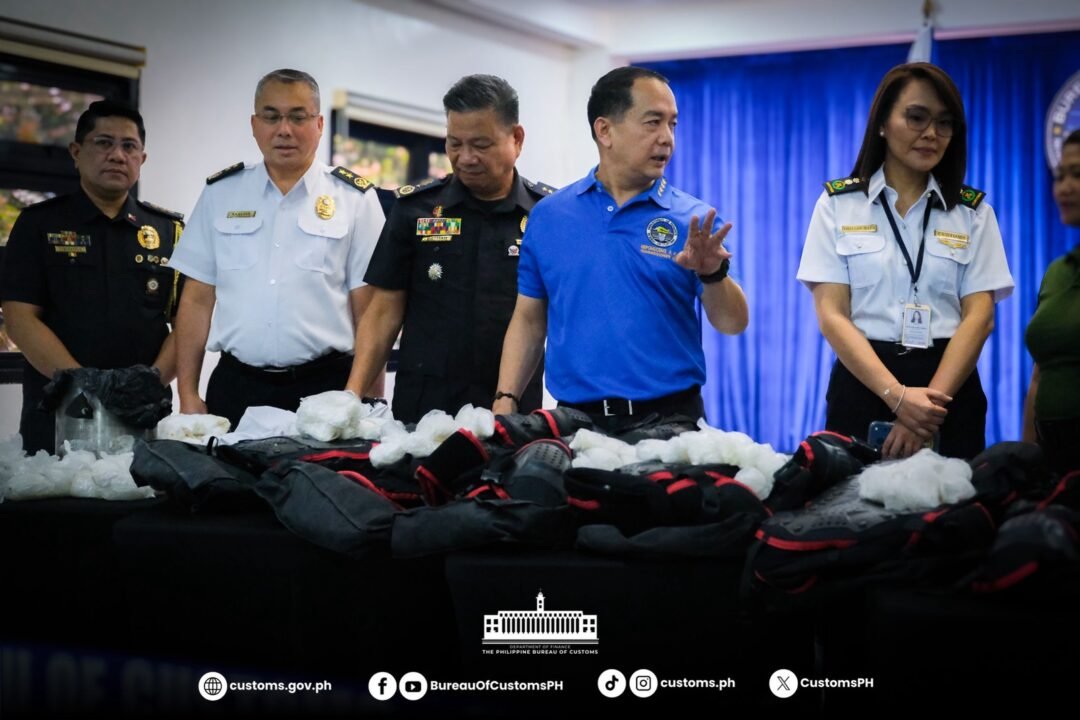
PASAY CITY — Customs Commissioner Ariel F. Nepomuceno led the inspection and turnover of seized illegal drugs at the Bureau of Customs–Ninoy Aquino International Airport (BOC–NAIA), with a total estimated value of more than ₱38 million, confiscated from warehouse facilities in Pasay City.
The operations were conducted in line with the directive of President Ferdinand R. Marcos Jr. to strengthen border protection and curb the entry of illegal substances into the country.
Commissioner Nepomuceno underscored the Bureau’s sustained commitment to securing the country’s borders.
“These successive interceptions demonstrate our firm resolve to detect and stop illicit shipments. We will continue to strengthen our risk management systems, enhance coordination with partner agencies, and ensure that all suspicious cargo and mail are thoroughly examined to protect the Filipino people from the dangers posed by illegal drugs,” he said.
In March 2026, several inbound parcels were flagged due to suspicious X-ray images, leading to the interception of illegal drugs concealed in various shipments. Authorities recovered a total of 5,691 grams of methamphetamine hydrochloride, locally known as “shabu,” with an estimated value of ₱38,698,800.
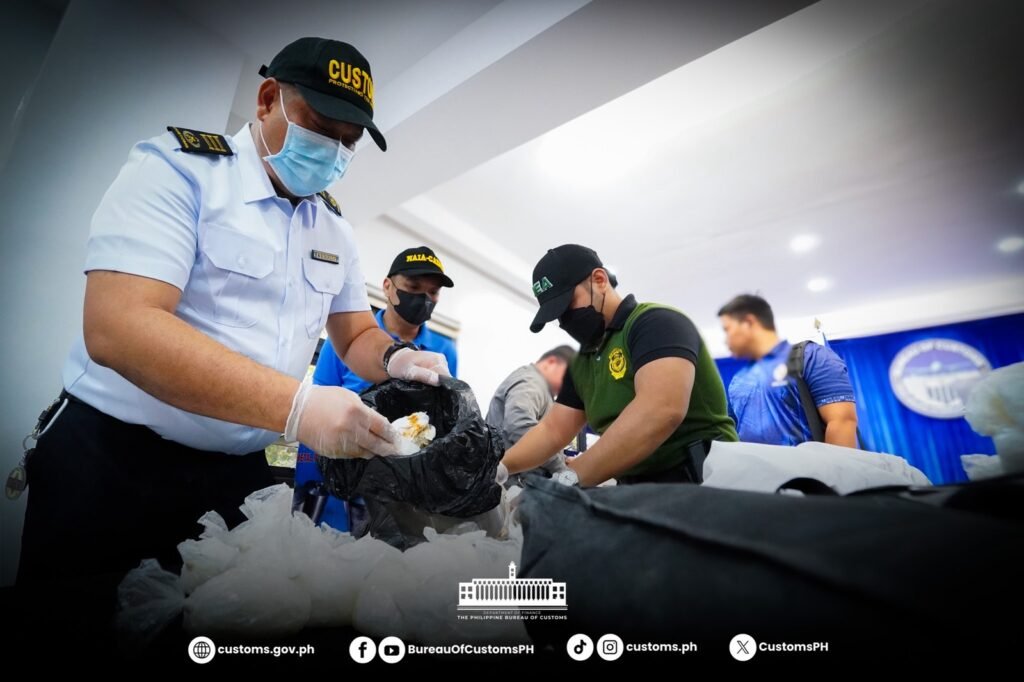
Photo: Bureau of Customs
From January to March 2026, BOC–NAIA recorded approximately ₱955.888 million worth of illegal drugs seized through its anti-drug operations.
District Collector Yasmin Obillos-Mapa emphasized the importance of sustained coordination and strict monitoring of inbound shipments, noting that the successful interceptions were made possible through strengthened risk profiling and the vigilance of frontline personnel.
Anchored on intensified border protection and sustained inter-agency cooperation, the Bureau of Customs’ nationwide anti-drug campaign has resulted in the seizure of ₱1.865 billion worth of illegal drugs from January 1 to March 29, 2026.
All seized items were turned over to the Philippine Drug Enforcement Agency for further investigation and proper disposition in accordance with existing laws and regulations, including Republic Act No. 9165, or the Comprehensive Dangerous Drugs Act of 2002, and Republic Act No. 10863, or the Customs Modernization and Tariff Act.