

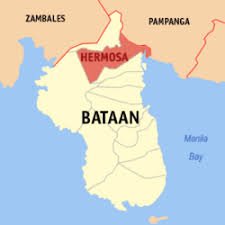
Department of Agrarian Reform (DAR) Secretary Conrado Estrella III has ordered an immediate investigation into the delayed implementation of agrarian reform cases in Hermosa, Bataan, warning that officials found negligent in the slow implementation of lawful orders will be held accountable.
Estrella directed Region 3 Director Atty. Eric Francis G. Luna to thoroughly look into the matter and determine the reasons behind the delay, stressing that agrarian reform cases must be implemented promptly and in accordance with the law.
“Any negligence or undue delay in the implementation of agrarian reform orders will not be tolerated. If lapses are established, heads will roll,” the Secretary said.
The Department clarified that the cases involve long-standing orders covering landholdings in Barangays Balsik and Mambog in Hermosa, Bataan, which encountered legal, procedural, and on-the-ground challenges during implementation.
For the landholdings in Barangay Balsik covering about 24.4558 hectares, a Coverage Order issued in 2011 directed the acquisition and distribution of the land to qualified agrarian reform beneficiaries (ARBs).
However, Estrella explained that the implementation must also comply with a 2013 Retention Order, which granted the landowners their legal right to retain up to five hectares each under the Comprehensive Agrarian Reform Law.
Because of this, the retained areas must first be properly identified and segregated through a survey before the remaining land can be distributed to farmer-beneficiaries.
In October 2025, DAR’s Land Tenure Services team attempted to conduct the required survey, but the activity was halted after the survey team was prevented from proceeding on-site. Efforts to seek assistance from local officials also did not push through as they opted to remain neutral.
The agency further noted that invitations were sent to potential farmer-beneficiaries for interviews and evaluation, but none attended, reportedly due to the belief that the entire landholding already belongs to them.
The agency clarified that under the law, the segregation of the landowners’ retention areas is a necessary step before the excess land can be distributed to qualified beneficiaries.
“We understand the aspirations of farmers to finally gain ownership of the land they till,” Estrella said. “However, the process must follow the law. The segregation of the landowners’ retention areas is a necessary step before the remaining land can be awarded to qualified beneficiaries.”
The agency assured the concerned ARBs that the distribution process can move forward once the survey is completed and the lawful boundaries of the retained areas are established.
Meanwhile, a separate case involving landholdings in Barangay Mambog has also encountered implementation issues.
Records show that the land was previously acquired under CARP and seven (7) Certificates of Land Ownership Award (CLOAs) were issued to beneficiaries.
Those CLOAs were allegedly sold to Wilson Cham. Subsequently, the CLOAs were later subject to cancellation proceedings, which started in 2004, resulting in a final order issued by the DAR Secretary in 2023 directing the identification of new farmer-beneficiaries.
During an ocular inspection conducted by DAR personnel, however, it was discovered that the area is now being used as residential lots. Based on available records, there is also no official land conversion order on file.
Because the land is no longer agricultural in actual use, DAR explained that the order directing the selection of new beneficiaries can no longer be implemented.
Under the Comprehensive Agrarian Reform Law, only agricultural lands fall within the coverage of CARP.
Legal precedents also recognize that a supervening event—or a development that significantly changes the situation after a judgment becomes final—may affect the execution of an order.
Despite these developments, DAR assured the public that it remains committed to ensuring that agrarian reform is implemented fairly and lawfully, while protecting the rights of both farmers and landowners. The agency also urged concerned stakeholders to cooperate with government processes to help resolve the long-standing agrarian issues in the area. (Department of Agrarian Reform)