

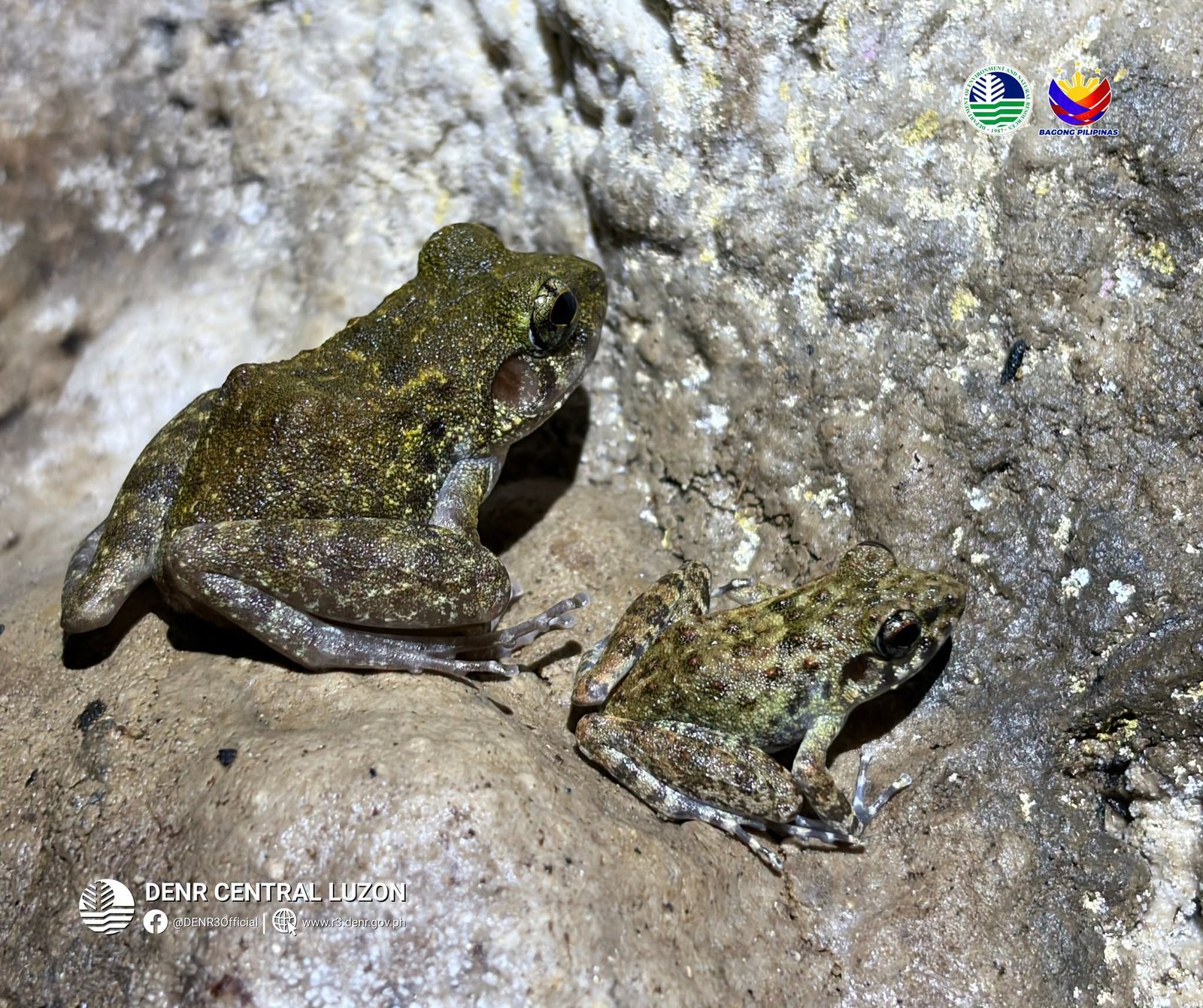
Photo By: DENR Central Luzon
City of San Fernando, Pampanga – The Department of Environment and Natural Resources (DENR) Central Luzon has documented the presence of the vulnerable Biak-na-Bato Limestone Frog (Platymantis biak) within the Biak-na-Bato National Park in Bulacan, reinforcing the significance of protecting the region’s biodiversity-rich cave ecosystems.
The rare amphibian species was recorded during a Biodiversity Monitoring System-Field Diary activity conducted by the DENR Community Environment and Natural Resources Office in Baliwag, in partnership with personnel from the Protected Area Management Office and interns from Bulacan State University.
Dennis Vergara, head of the DENR community office in Baliwag, said the frogs were discovered inside Suklib Kabayo Cave during wildlife and habitat assessment activities aimed at monitoring species populations within the protected area.
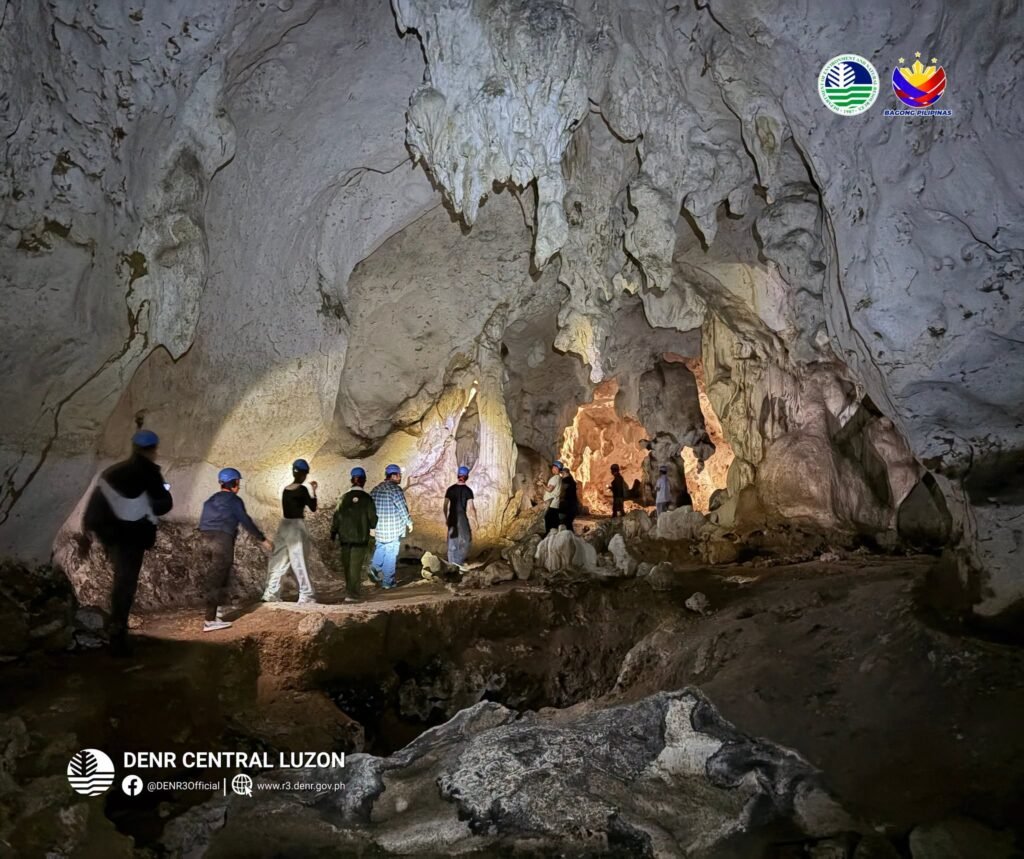
Photo By: DENR Central Luzon
“The limestone frogs were observed perched above depressions in a cave pillar approximately 69.17 meters from the main entrance of Suklib Kabayo Cave,” Vergara reported.
The monitoring activity forms part of DENR’s continuing efforts to strengthen biodiversity conservation and gather scientific data on endemic and threatened wildlife species inhabiting protected landscapes in Central Luzon.
DENR Regional Executive Director Ralph Pablo emphasized that the sighting demonstrates the ecological importance of Biak-na-Bato National Park as a refuge for vulnerable and endemic species.
“The presence of the Biak-na-Bato Limestone Frog inside the protected area reflects the ecological importance of our caves and forest ecosystems. This serves as a reminder that our conservation efforts must remain steadfast to ensure the survival of vulnerable and endemic wildlife species,” Pablo said.
Endemic to Luzon, Platymantis biak thrives in secondary growth lowland forests and limestone environments, particularly near cave entrances and within cave systems.
The species is currently listed as Vulnerable under DENR Administrative Order No. 2019-09 and classified as Near Threatened by the International Union for Conservation of Nature (IUCN) Red List due to ongoing habitat threats.