

Photo By: CDC
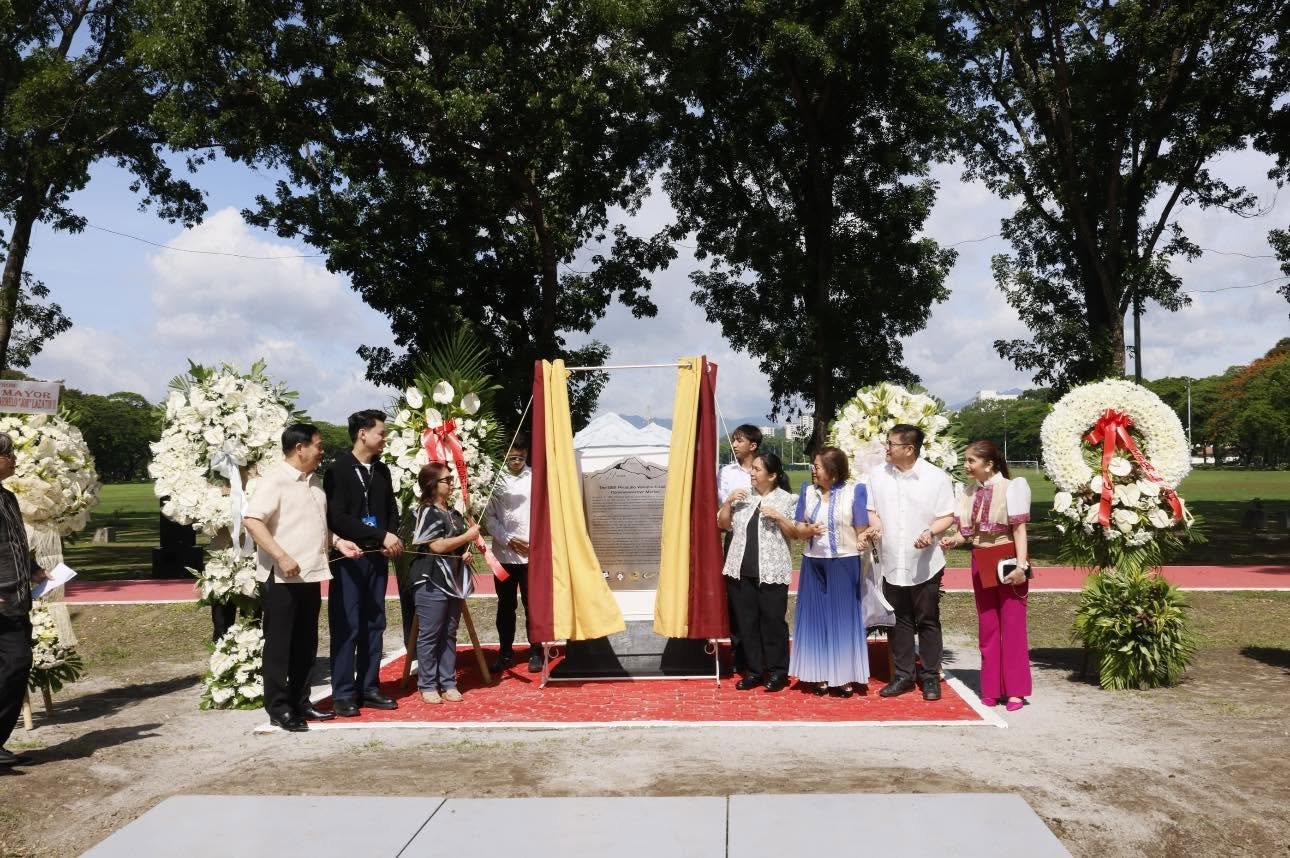
CLARK FREEPORT, Pampanga — Thirty-five years after the catastrophic eruption of Mt. Pinatubo reshaped the landscape of Central Luzon, officials, scientists, and community leaders gathered at Clark on June 9 to honor the volcano’s legacy and reflect on how one of the country’s worst natural disasters became a catalyst for growth and transformation.
During commemorative rites held at the Clark Parade Grounds, Clark Development Corporation (CDC) President and Chief Executive Officer Atty. Agnes VST Devanadera highlighted the remarkable journey of Clark from a devastated former military base into a thriving economic and investment hub.
Devanadera said the 1991 eruption, coupled with the conversion of the former Clark Air Base into a special economic zone, laid the foundation for what is now a key gateway to the Luzon Economic Corridor and one of the country’s fastest-growing development centers.
“The story of Clark is a story of resilience. It demonstrates how visionary leadership, sound policies, and the determination of communities can transform adversity into opportunity,” she said.
Former President and Pampanga Second District Representative Gloria Macapagal Arroyo also joined the commemoration, recalling how timely scientific monitoring, coordinated government action, and community cooperation helped save lives and support recovery efforts in the aftermath of the eruption.
She emphasized the vital role played by experts from the Philippine Institute of Volcanology and Seismology (PHIVOLCS) and the United States Geological Survey (USGS), whose scientific assessments and warnings enabled authorities to undertake preventive measures before the disaster struck.
A key highlight of the event was the unveiling of a historical marker at the Clark Parade Grounds, recognizing the global significance of the Mt. Pinatubo eruption and paying tribute to the scientists, responders, and communities that contributed to disaster risk reduction and recovery efforts.
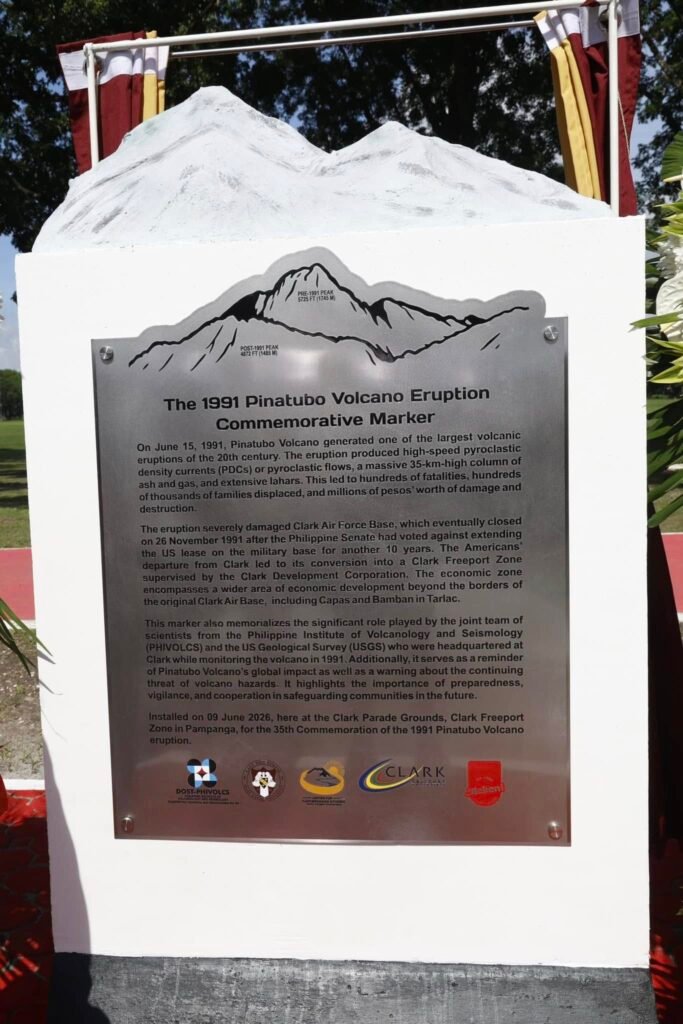
Photo By: CDC
The marker also serves as a reminder of the continuing need for preparedness and vigilance amid natural hazards, especially in a country frequently affected by volcanic activity, earthquakes, and severe weather events.
Organized by the Holy Angel University-Center for Kapampangan Studies in partnership with PHIVOLCS, the anniversary observance included a wreath-laying ceremony, the unveiling of the marker, and resilience-focused discussions highlighting lessons learned from the eruption and their relevance to present-day disaster management.
Officials noted that while the eruption caused widespread destruction across Pampanga, Tarlac, and Zambales, it also became a defining moment that showcased the strength of affected communities and the value of science-based decision-making.
Three and a half decades later, Clark’s continued growth and development stand as a powerful testament to the region’s ability to recover, adapt, and thrive despite adversity, making the commemoration both a tribute to the past and a call for continued resilience in the future.