

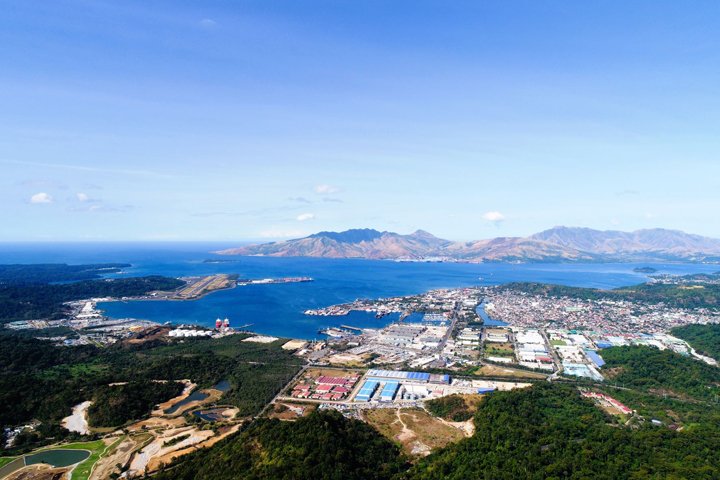
Subic Bay Freeport — The Subic Bay Metropolitan Authority (SBMA) recorded ₱1.77 billion in port revenues in 2025, marking a 4.2-percent increase from ₱1.7 billion in 2024, as the agency sustained growth amid global economic challenges.
SBMA Chairman and Administrator Engr. Eduardo Jose L. Aliño said the ₱71.7-million increase reflects the continued strength of Subic Bay as a key logistics and trade hub in Southeast Asia.
Of the total revenue, the Seaport Department contributed the largest share at ₱1.47 billion, followed by the Airport Department with ₱182 million, and the Trade Facilitation and Compliance Department (TFCD) with ₱125 million.
“Our 2025 port revenue performance demonstrates how Subic Bay continues to thrive despite global economic uncertainties. This achievement highlights our modern infrastructure, efficient processes, and strong public-private partnerships,” Aliño said.
The agency also reported a strong start for 2026, with port revenues in January reaching ₱113.7 million—up 13 percent from ₱100.4 million in the same period last year.
Of the January 2026 total, ₱97.7 million came from the Seaport Department, ₱5 million from the Airport Department, and ₱11 million from TFCD.
Aliño attributed the growth to several key factors, including a 52-percent increase in SBMA share collections driven by higher non-containerized cargo volumes. Agricultural commodities led the surge, with rice shipments rising by 484 percent, corn by 230 percent, wheat by 48 percent, and soya by 3 percent.
Vessel charges also climbed by 59 percent, while cargo charges grew by 38 percent.
Non-containerized cargo volumes increased by 47 percent overall, alongside a 46-percent rise in imported petroleum products. Foreign ship calls also went up by 17 percent, with 149 additional vessel arrivals recorded.
Aliño said SBMA will continue investing in port modernization, digitalization, and sustainability initiatives to sustain growth.
“Our vision is to maintain this momentum and position Subic Bay as a leading port in Southeast Asia, enhancing national economic development and global trade connectivity,” he added.