

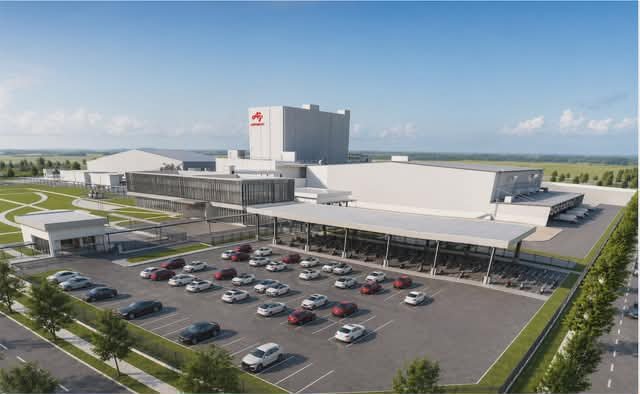
Tarlac City — Industrial expansion in the Philippines is entering a new phase, with Central Luzon emerging as the country’s next major manufacturing growth corridor. As industrial activity expands beyond traditional hubs, investors are increasingly prioritizing locations that can support large-scale operations through integrated infrastructure, long-term scalability, and operational reliability.
Building on a Proven Industrial Platform
TARI Estate represents Aboitiz Economic Estates’ next major industrial platform in Central Luzon, extending the integrated development model established at LIMA Estate into one of the country’s fastest-emerging manufacturing corridors. It carries forward an established approach to integrated estate development, aligning industrial land, utilities, and long-term expansion capacity within a unified system designed to support sustained manufacturing growth.
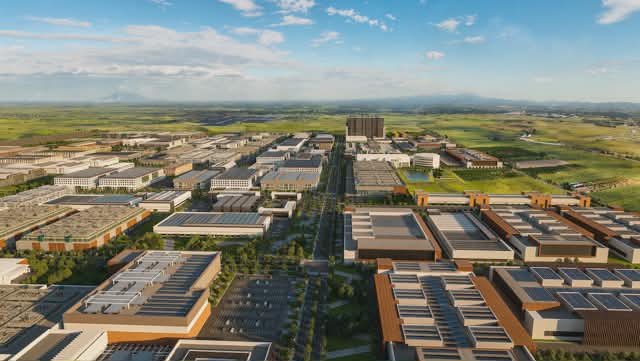
Tarlac Enerzone: TARI Estate’s Dedicated Power Backbone
Within this framework, Tarlac Enerzone is designed as a dedicated substation embedded within the estate’s industrial backbone, supporting energy requirements that match the intensity and continuity of manufacturing operations. Initially rated at 2 x 50 MegaVolt Amperes (MVA), its role is structurally integrated into the estate’s design—aligned with projected industrial loads, planned alongside phased development, and coordinated within the broader utility ecosystem that supports locator operations. Expected to be operational by Q4 2026, the substation provides a direct and stable power interface for industrial users, supporting operational continuity while enabling capacity to scale in step with production requirements.
Beyond capacity, Tarlac Enerzone is being designed around the operational realities of continuous manufacturing environments, where consistency, response time, and system reliability directly affect production performance. Its integration within the broader Aboitiz ecosystem allows utility planning, estate operations, and infrastructure management to be coordinated more closely within a single industrial platform, supporting greater operational predictability for locators over the long term.
Signals of Early Market Confidence
The strength of this approach is reflected in early locator activity across the estate. Investments from major global manufacturers such as Coca-Cola Europacific Aboitiz Philippines and Ajinomoto Philippines Corporation reflect early confidence in the estate’s ability to support energy-intensive, large-scale operations. Alongside these commitments, cumulative locator take-up for TARI Estate’s first phase has reached 90 hectares, highlighting sustained market recognition of the estate’s readiness and long-term positioning.
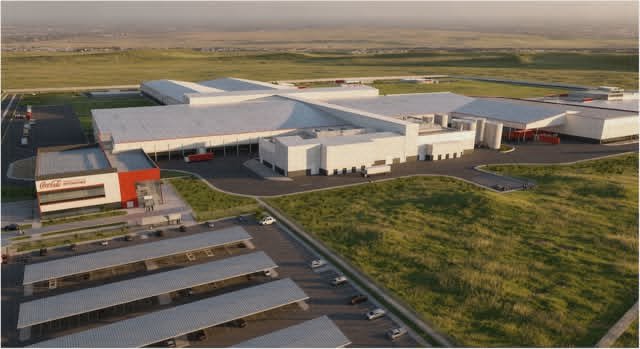
For manufacturing investors, these early allocations are often read as indicators of infrastructure confidence. Large-format industrial users typically assess not only land availability, but the underlying systems that support continuous operations—particularly power, water, logistics access, and the ability to scale without disruption. The entry of established manufacturers into TARI Estate reflects growing market confidence in Central Luzon’s industrial trajectory and in the estate’s ability to support long-term operational scale.
Reliable Industrial-Grade Power
Tarlac Enerzone forms part of that readiness framework. It is structured to support industrial-grade consumption patterns and to align with the operational profiles of manufacturers that require stable, uninterrupted production environments. It sits within a broader integrated system under Aboitiz Economic Estates, where power, utilities, infrastructure, and estate management are coordinated to support long-term industrial performance.
This integrated structure allows TARI Estate to respond to evolving manufacturing requirements while reducing the need for locators to adjust operations around infrastructure constraints. Capacity planning is embedded within estate development, with energy systems designed in step with phased industrial expansion.
Infrastructure-Driven Investment Confidence
What emerges is a development approach that prioritizes continuity of operations and long-term scalability. For locators, this translates into a clearer path from establishment to expansion, supported by infrastructure that aligns with industrial demand trajectories rather than requiring adjustment after the fact.
Beyond industrial activity, the estate is also expected to contribute to broader regional economic participation through employment generation, supplier activity, logistics demand, and the gradual expansion of commercial and institutional services around the estate.
TARI Estate’s positioning also builds on the established track record of Aboitiz Economic Estates in South Luzon, where sustained locator growth at LIMA Estate are expected to play an increasingly important role in supporting the next generation of industrial growth.