

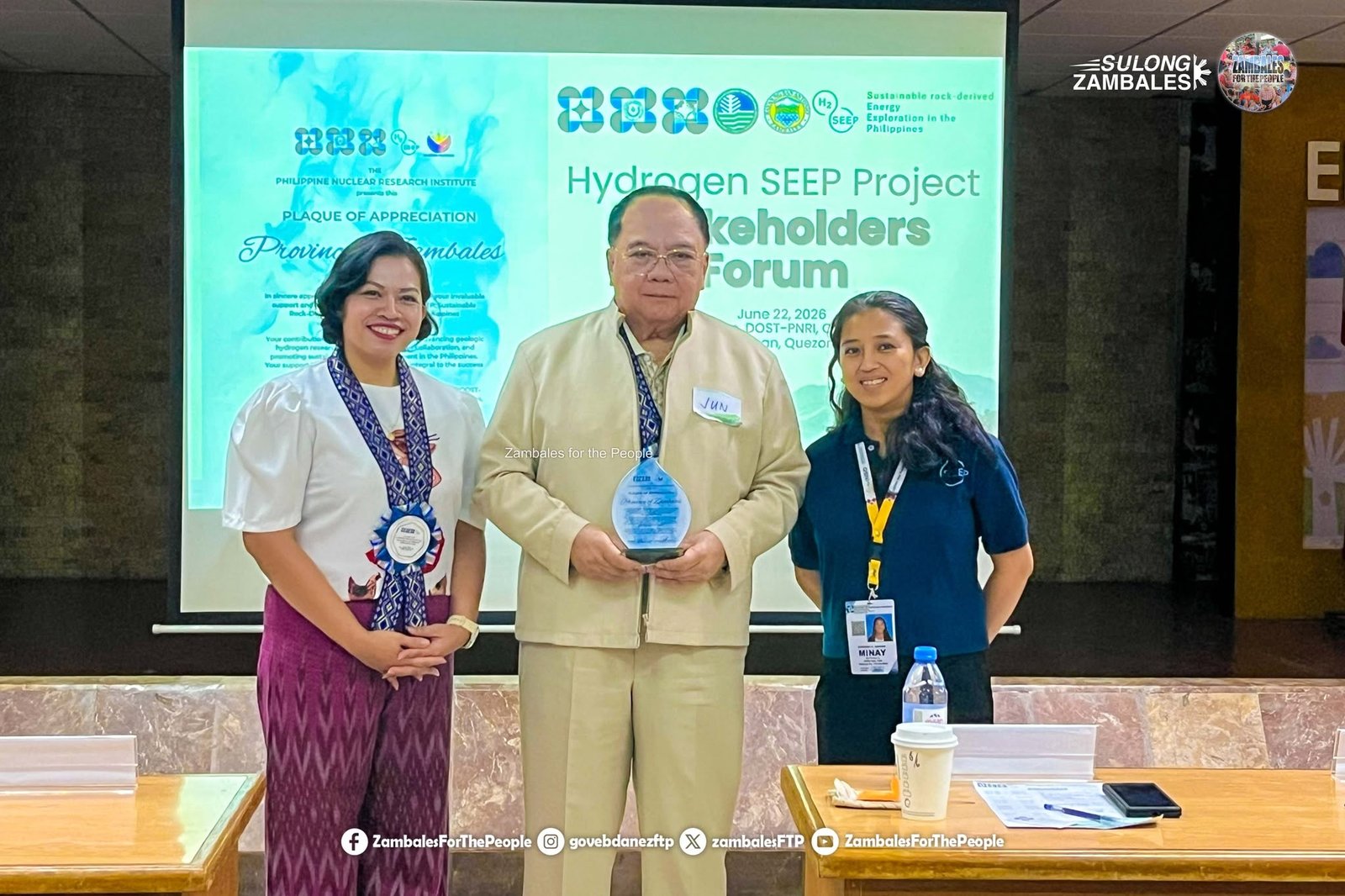
Photo By: Zambales for the People
Iba, Zambales — Zambales is positioning itself at the forefront of a potentially game-changing energy resource as studies continue to reveal promising natural hydrogen deposits in parts of the province.
Governor Hermogenes “Jun” Ebdane Jr. reaffirmed the provincial government’s support for scientific research and innovation during the Hydrogen SEEP Stakeholders Forum held on June 22, highlighting the potential of natural hydrogen to create new opportunities for sustainable development and economic growth in Zambales.
The forum, organized by the Philippine Nuclear Research Institute (PNRI), gathered scientists, government agencies, and local officials to discuss the latest findings on geologic hydrogen exploration in Zambales and Pangasinan.
Researchers from the Department of Science and Technology (DOST) reported encouraging results from ongoing studies, identifying Nagsasa Cove in San Antonio and Barangay Poonbato in Botolan among the areas showing significant potential for natural hydrogen reserves.
Natural hydrogen, often referred to as “white hydrogen,” is gaining global attention as a possible clean energy source that could help countries reduce carbon emissions while strengthening energy security.

Photo By: Zambales for the People
Governor Ebdane said the province welcomes scientific initiatives that could pave the way for new industries, investments, and employment opportunities while ensuring environmental protection and community participation remain at the center of future development efforts.
Joining the governor at the forum were local officials from San Antonio, Botolan, and Mangatarem, Pangasinan, along with representatives from the Provincial Engineering Office and Provincial Planning and Development Office.
As DOST continues its technical assessments and validation studies, stakeholders are exploring policies and long-term strategies that could guide the responsible development of natural hydrogen resources should commercial viability be established.
For Zambales, the ongoing research signals more than a scientific breakthrough—it represents a potential pathway toward becoming a key player in the country’s future clean energy landscape.