

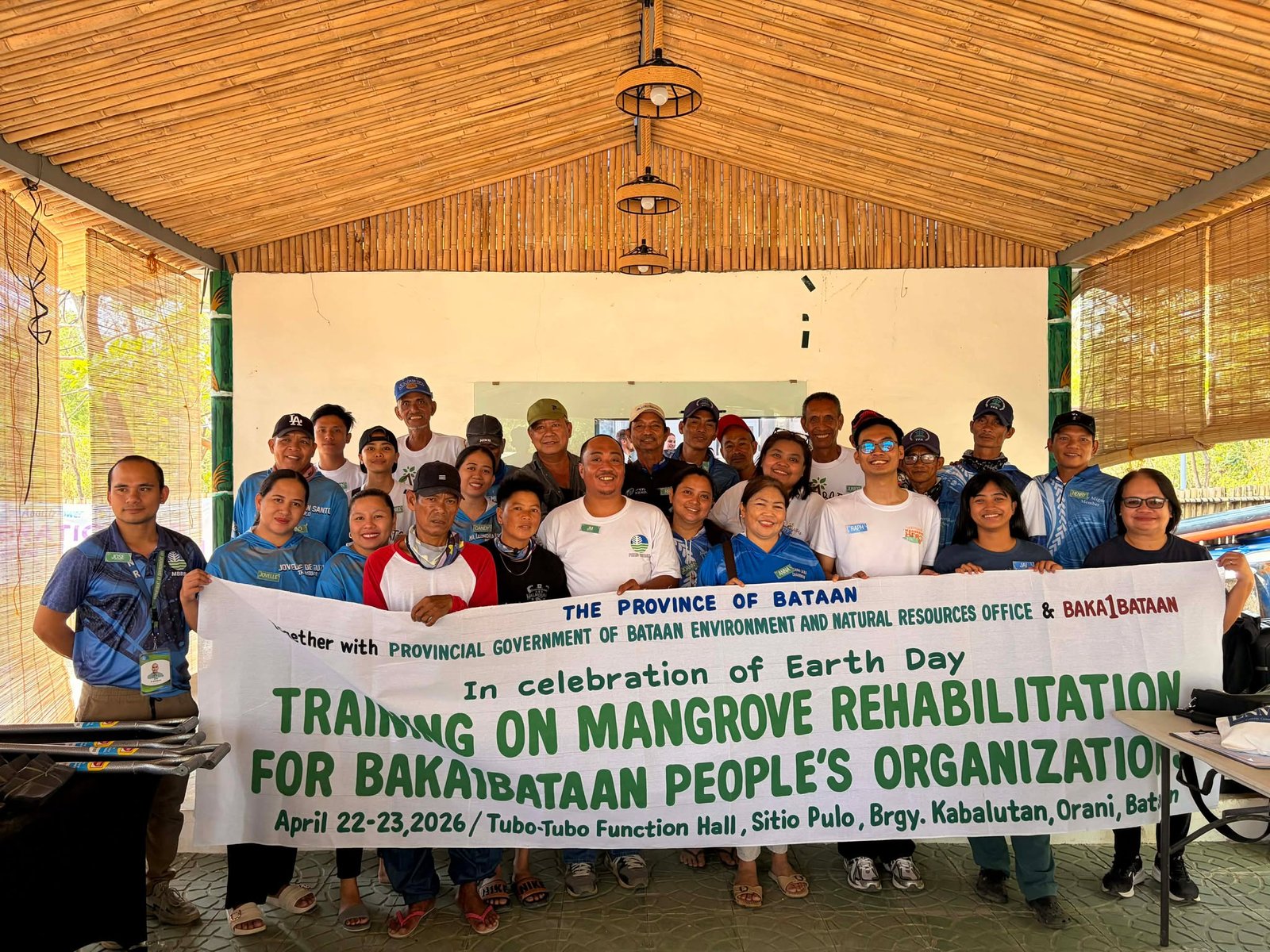
Empowering Stewards. Participants of the Mangrove Rehabilitation Training held on April 22–23, 2026, in Orani, Bataan. The initiative focused on equipping local communities with the technical skills needed for long-term environmental sustainability.
Orani, Bataan – AboitizPower, through its private limited partnerships GNPower Mariveles Energy Center and GNPower Dinginin, joined forces with the Department of Environment and Natural Resources Bataan, the Provincial Government Environment and Natural Resources Office (PG-ENRO), and local organizations to lead a two-day mangrove rehabilitation training in celebration of Earth Day 2026.
Held on April 22 to 23 in Orani, the initiative aimed to equip local fisherfolk and community groups with scientific and technical knowledge needed to sustain mangrove restoration projects across coastal areas in Bataan.
Participants from the Tubo-Tubo Fisherfolks Association (TFA) and the Samahan ng Magsasaka ng San Rafael – Anak Dagat (SAMASAD) underwent training on mangrove nursery management, seed preparation, species identification, planting methods, and site maintenance. TFA currently manages GMEC’s 32-hectare mangrove protection area in Orani, while SAMASAD oversees GNPD’s five-hectare mangrove site in Samal.
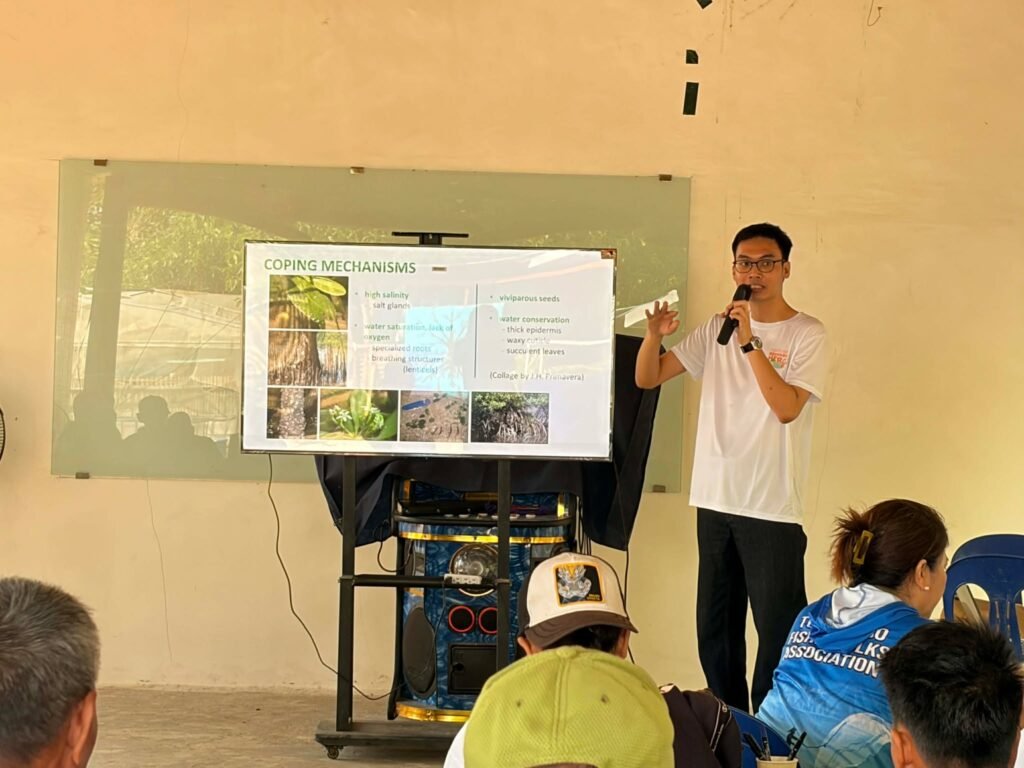
Mangrove 101. PG-ENRO Bataan OIC Raphael De Leon facilitates a “Mangrove 101” session, explaining the specific ecological needs of the coastlines of Bataan.
Provincial Government Environment and Natural Resources Office Officer-in-Charge Raphael De Leon emphasized the importance of proper training in ensuring the long-term success of mangrove rehabilitation projects in the province.
“A big step forward for Bataan. With many mangrove initiatives underway, it is important that our people’s organizations share the same understanding when it comes to nursery preparation, planting, and long-term maintenance,” De Leon said.
According to GMEC-GNPD Reputation and Stakeholder Management Manager Joseph Paolo Mendoza, the program goes beyond tree planting and focuses on science-based conservation practices.
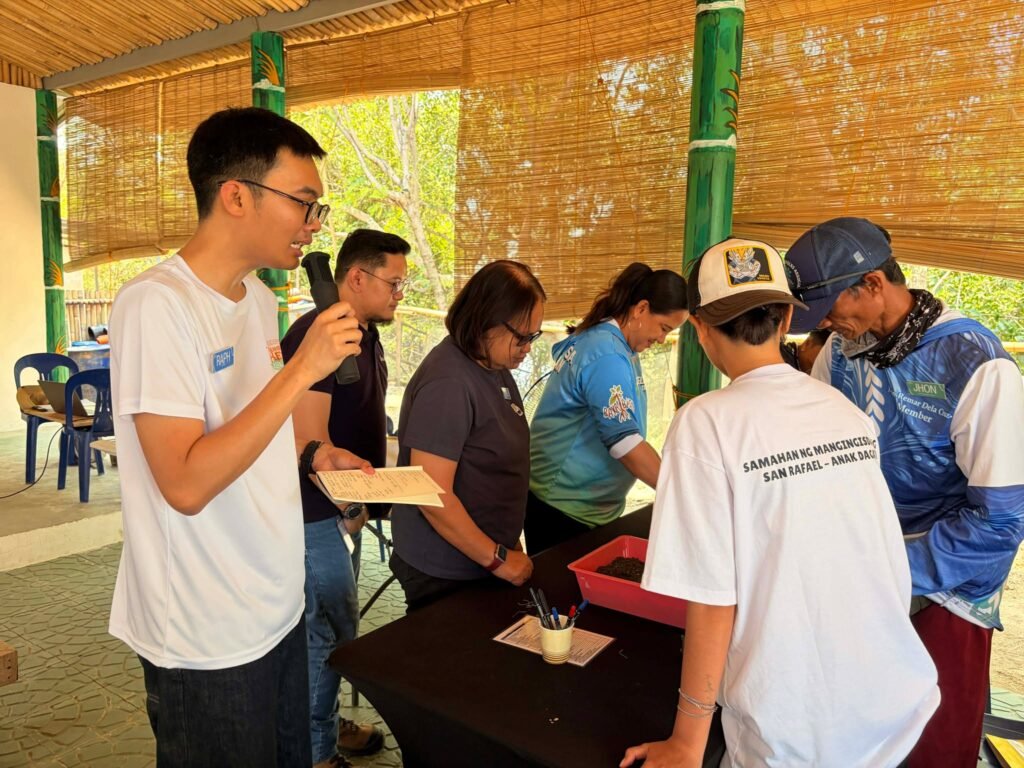
PG-ENRO OIC Raphael De Leon (extreme left) during his “Mangrove 101” session.
“Real stewardship is not just about how many mangroves we plant, but about doing it correctly and sustainably,” Mendoza said. “Through this partnership, we are helping communities gain the knowledge needed to protect coastal ecosystems for future generations.”
The first day of training was held at the Tubo-Tubo Function Hall in Barangay Kabalutan, where participants attended lectures on mangrove ecology and restoration science. Sessions included discussions on growing Pagatpat (Sonneratia alba) seedlings, nursery care, and understanding zonation or the appropriate coastal zones for specific mangrove species.
On the second day, participants conducted field exercises at GMEC’s Mangrove Adoption and Protection Site in Orani. They practiced identifying mangrove species in their natural habitat and assessed the condition of existing plantations to better understand site management and survival techniques.
TFA secretary Joann Laguerta said the training improved the community’s confidence in handling future restoration efforts.
“Through the Mangrove Nursery Management training, we learned the proper way of preparing and growing seedlings, selecting the right species, and understanding the importance of our role in protecting mangroves,” Laguerta said.
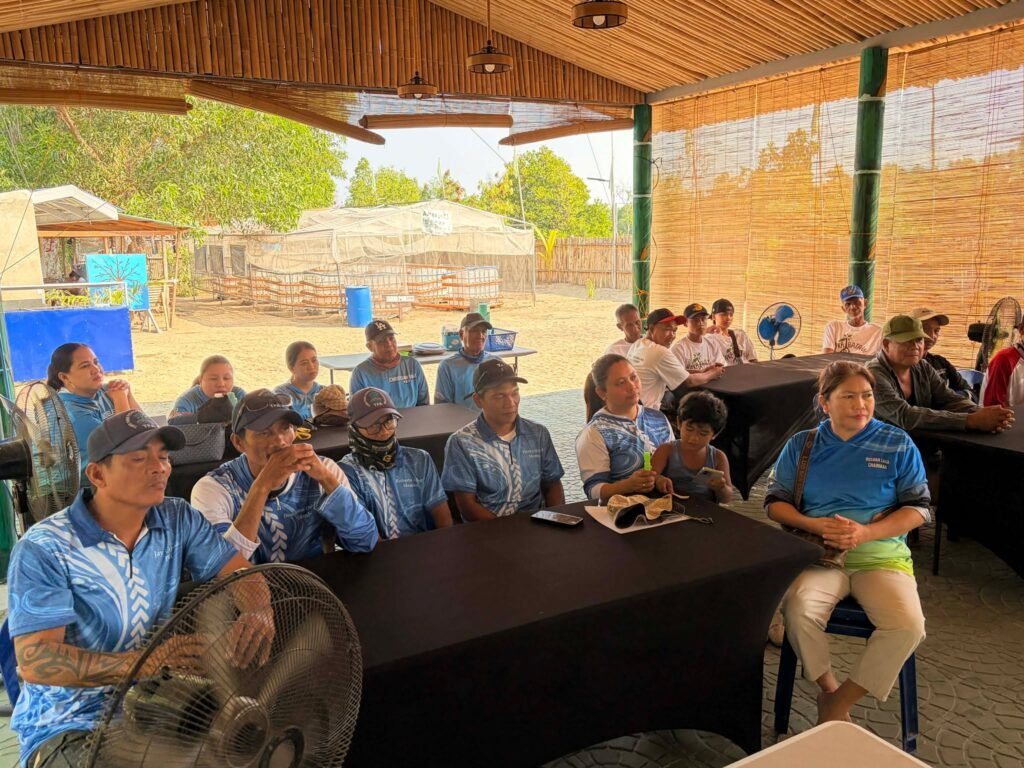
TFA and SAMASAD attendees participate in lectures and simulation exercises during the first day of the mangrove rehabilitation training.