

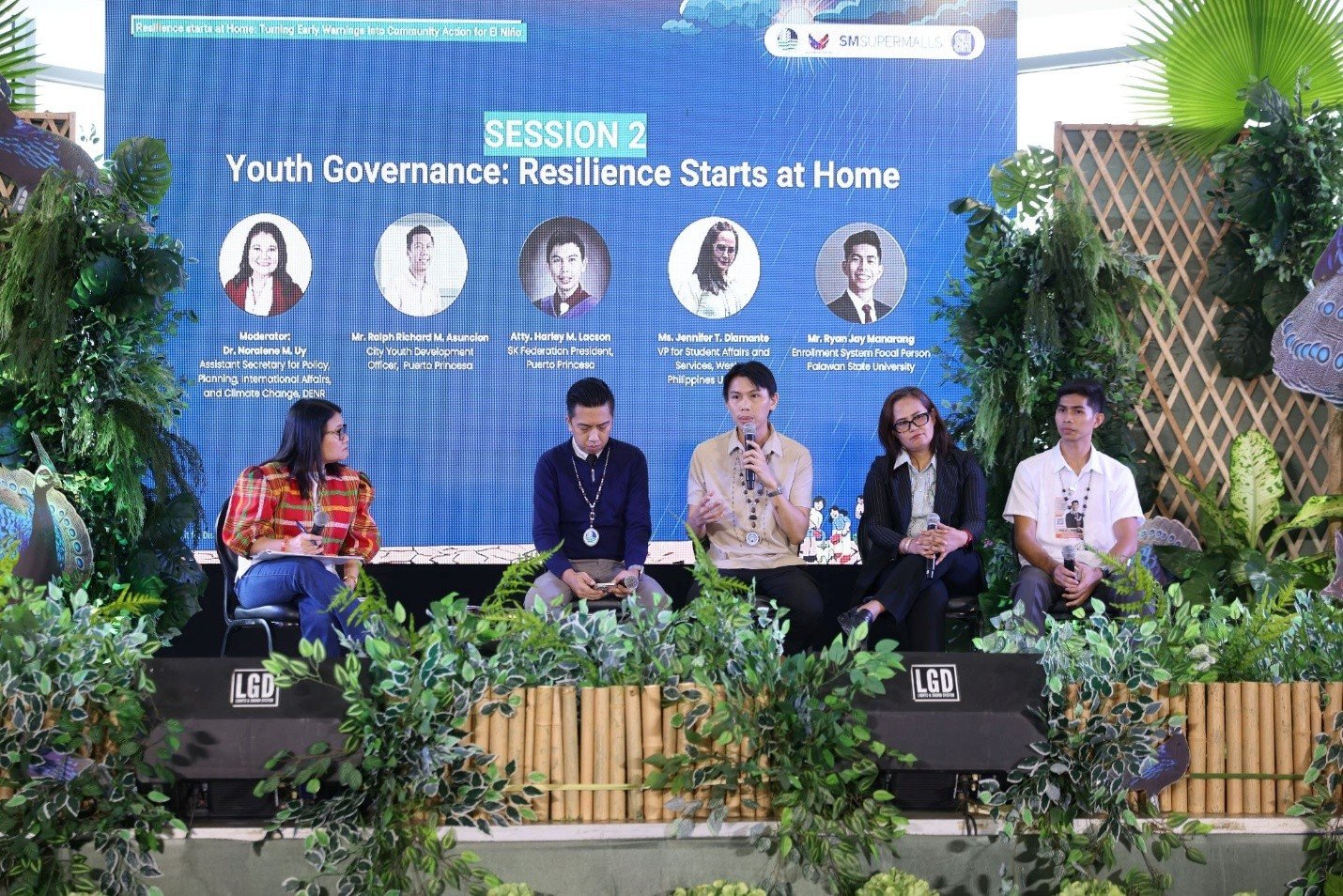
DENR Assistant Secretary for Policy, Planning, International Affairs and Climate Change Dr. Noralene Uy (left) moderates a panel discussion on youth governance with local leaders during the Kabataan Summit on Disaster Risk Reduction at SM City Puerto Princesa, Palawan, on October 13, 2026. The discussion highlighted the role of young people in promoting disaster preparedness, environmental protection, and community resilience, in line with the theme “Resilience Starts at Home.”
Department of Environment and Natural Resources (DENR) Secretary Juan Miguel “Mitch” Cuna called on the Filipino youth to be active community leaders in disaster risk reduction and environmental protection during the Kabataan Summit on Disaster Risk Reduction held at SM City Puerto Princesa, Palawan in observance of the International Day of Disaster Resilience, October 13.
Addressing youth leaders, local officials, environmental advocates, and development partners, Secretary Cuna emphasized the urgent need for communities to strengthen preparedness and resilience amid the increasing risks posed by natural hazards and climate-related events, particularly the impending Super El Niño. “We may not be able to prevent every disaster from happening. But we can prepare for them. We can understand the risks, plan ahead, and make sure that when disaster strikes, our families and communities are ready,” he said.
The environment chief noted that the Philippines continues to face numerous threats each year, including typhoons, floods, droughts, earthquakes, and other disasters, underscoring that preparedness is a shared responsibility across all sectors of society.
Highlighting this year’s International Day for Disaster Risk Reduction theme, “Resilience Starts at Home,” the DENR Secretary underscored the importance of building a culture of preparedness that begins in households and communities. “While disasters cannot always be prevented, their impacts can be reduced through risk awareness, proper planning, and timely action,” he said. “Families are often the first line of defense during emergencies and should be equipped to protect themselves and support one another when hazards occur.”
The environment chief also highlighted the growing challenges posed by slow-onset hazards such as El Niño, which can lead to prolonged droughts, extreme heat, and water shortages. He emphasized the need to shift from reactive responses to proactive risk management, encouraging communities to take preventive measures before hazards escalate into crises. “We are not just waiting for someone to save us. We are our own first responders. We are our own partners in building resilience,” he stressed.
“Central to this approach is the protection of the country’s natural resources and ecosystems,” Secretary Cuna noted. “Forests, watersheds, rivers, and coastal areas play a critical role in storing and regulating water, safeguarding communities, and supporting livelihoods. Protecting the environment, from upland areas to marine ecosystems, is therefore an essential component of disaster preparedness and resilience-building efforts.”
The Secretary likewise recognized that disasters disproportionately affect vulnerable groups, including women, children, persons with disabilities, low-income households, and gender-diverse individuals. He reaffirmed the government’s commitment, under the leadership of President Ferdinand R. Marcos Jr., to reducing disaster risks and minimizing their impacts through coordinated action and strengthened preparedness programs.
Addressing participants from across Palawan, including Sangguniang Kabataan officials, student leaders, and youth environmental advocates, Secretary Cuna emphasized the valuable role of young people in building resilient communities. He cited their energy, creativity, and willingness to explore innovative solutions as vital assets in addressing today’s environmental and disaster-related challenges.
“The problem may be complicated, but it is not insurmountable,” Secretary Cuna told participants. Through the summit, participants were introduced to practical tools and strategies for understanding hazards and improving community preparedness, including geohazard and weather monitoring, water technologies, rainwater harvesting, and other disaster-resilient solutions. The DENR encouraged young leaders not only to acquire knowledge but also to translate information into meaningful action within their communities.
Concluding his message, Secretary Cuna urged participants to share what they learn, lead community action, and help build safer homes, stronger communities, and a more resilient Philippines. “Resilience does not begin when disaster strikes. It begins with what we know, grows with what we do, and becomes stronger when we do it together,” he said.