

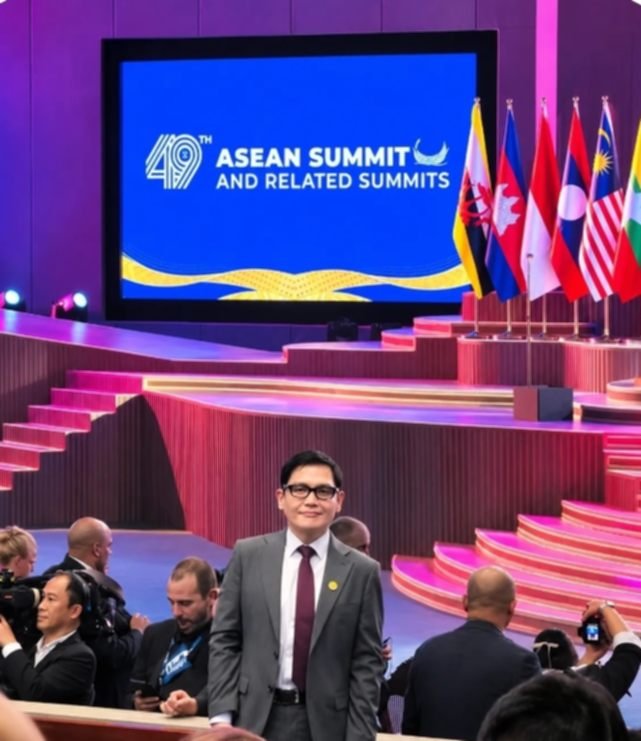
MANILA, Philippines — Zambales First District Rep. and House Deputy Speaker Jefferson “Jay” Khonghun has welcomed progress in negotiations for a proposed South China Sea Code of Conduct (COC), saying the diplomatic gains under the Philippines’ Association of Southeast Asian Nations (ASEAN) chairmanship could help advance regional stability and protect the livelihood of Filipino fishermen.
Khonghun said the Philippines had laid a strong foundation for completing the long-awaited agreement, which will guide participating countries in managing maritime disputes and preventing tensions in the contested waters.
The lawmaker made the statement on Monday, Nov. 16, following Foreign Affairs Secretary Maria Theresa Lazaro’s announcement that ASEAN and China had reached provisional agreement on about 80 percent of the proposed COC provisions, up from around 50 percent before the Philippines assumed the ASEAN chairmanship.
He said the progress would provide Singapore with a stronger negotiating framework when it takes over ASEAN leadership in 2027.
For Khonghun, whose congressional district includes coastal communities facing the West Philippine Sea, the negotiations have direct implications for the safety and economic security of fishing communities.
“For us in Zambales, the West Philippine Sea is not just about territory. It is about the livelihood and safety of our fishermen and the future of our coastal communities,” he said.
The House leader stressed that any agreement must protect Philippine maritime rights while promoting peaceful relations among countries with competing claims in the South China Sea.
He also expressed support for the Department of Foreign Affairs in ensuring that the final agreement remains consistent with international law, particularly the United Nations Convention on the Law of the Sea (UNCLOS).
The proposed COC seeks to establish rules and mechanisms for managing maritime disputes, preventing dangerous encounters and strengthening cooperation among claimant countries.
However, negotiations still face major challenges, including disagreements over the agreement’s geographical coverage and whether its provisions will be legally binding.
Lazaro said discussions would continue under Singapore’s ASEAN chairmanship in 2027, with participating countries committed to pursuing an effective and substantive agreement.
Khonghun said sustained diplomatic engagement would be necessary to resolve remaining differences, emphasizing that the success of the negotiations should ultimately be measured by their contribution to maritime security and the protection of coastal communities.
“Our fishermen deserve to earn a living without fear of harassment or intimidation. We want an agreement that helps ensure their safety while protecting our country’s rights,” he said.