

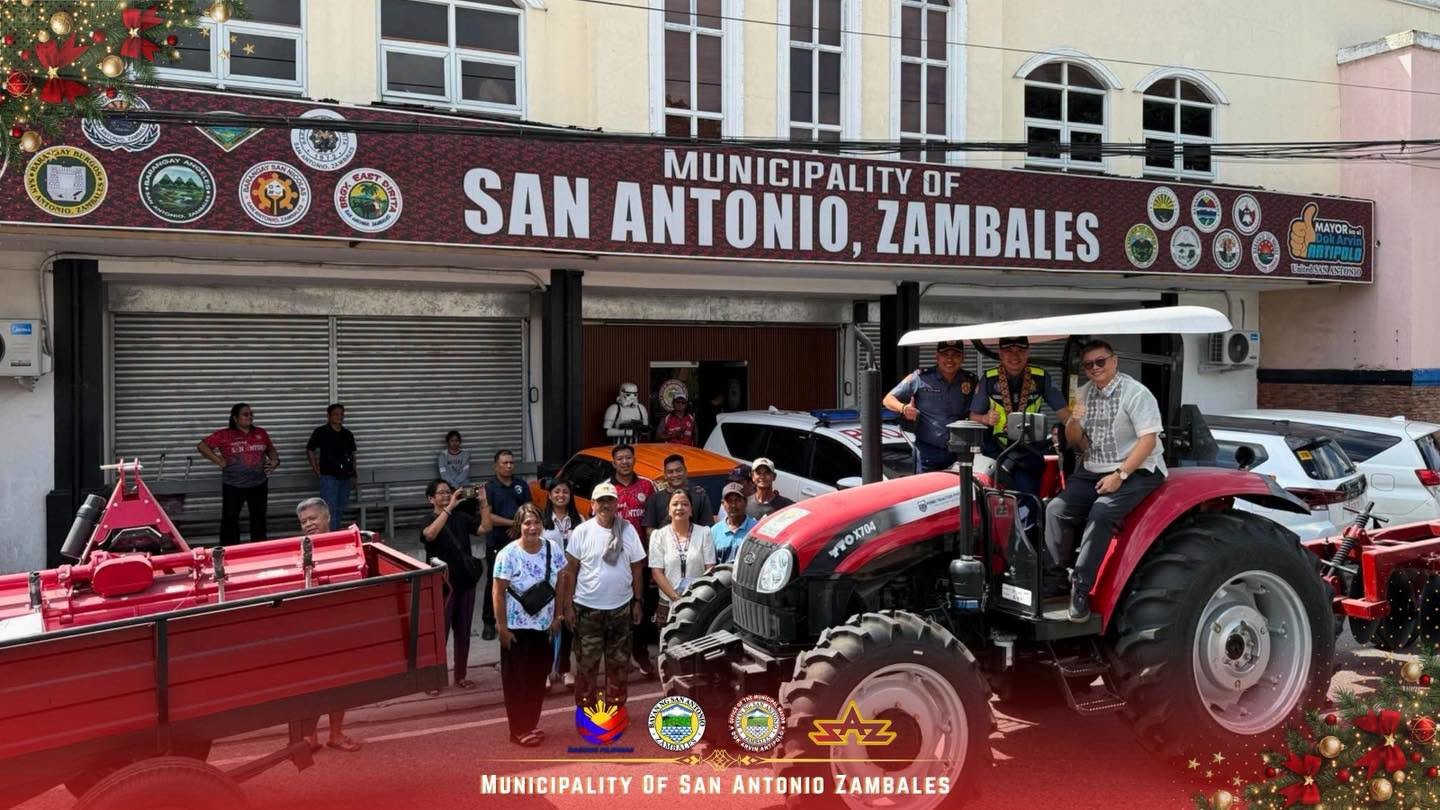
Photo by: San Antonio Zambales PIO
SAN ANTONIO, Zambales — The municipal government of San Antonio is expanding investments in agricultural productivity through farm mechanization and household food production initiatives aimed at lowering farming costs, improving rural incomes, and strengthening local food security.
The local government on Wednesday, November 18, turned over a tractor to the San Esteban Farmers Association (SEFA) under its Farm Mechanization Program, providing farmers with equipment to accelerate land preparation, improve farm operations, and increase agricultural output.
Mayor Arvin Rolly D. Antipolo said the initiatives are part of a broader effort to strengthen the local agricultural sector while encouraging households to participate in food production.
“By providing our farmers with modern equipment and encouraging every household to grow its own vegetables, we are strengthening food production at both the community and household levels. These initiatives reflect our commitment to improving farmers’ livelihoods, ensuring food security, and building a healthier and more self-reliant San Antonio,” Antipolo said.
The tractor was provided with assistance from the Department of Agriculture and the Municipal Agriculture Office (MAO), headed by Jennybabe Dancel Caabay.
Barangay Chairperson Alma Ventura Jardin and SEFA President Rolly Racsa attended the turnover. The farmers’ association will manage the equipment’s operation and maintenance to ensure its continued use by members.
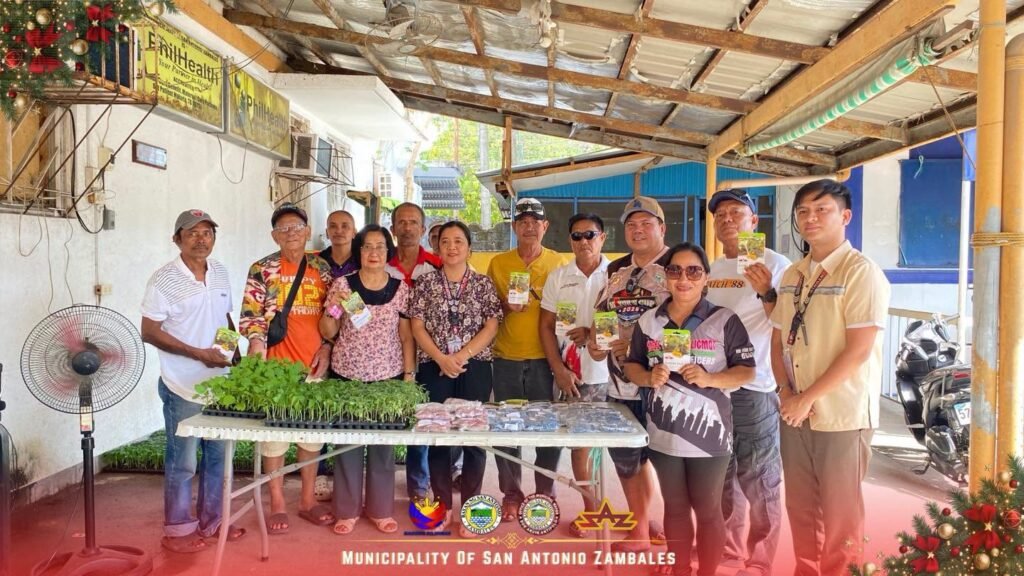
Photo by: San Antonio Zambales PIO
Alongside farm mechanization, the municipality distributed vegetable seedlings under its Barangay Gulayan Program to encourage backyard and community gardening.
The initiative, led by the MAO in coordination with Sangguniang Bayan Member Deo Delos Reyes, seeks to increase household access to fresh vegetables, reduce food expenses, and promote healthier eating habits.
The twin programs extend agricultural support beyond farm operations by combining productivity-enhancing equipment for organized farmers’ groups with household-level food production.