

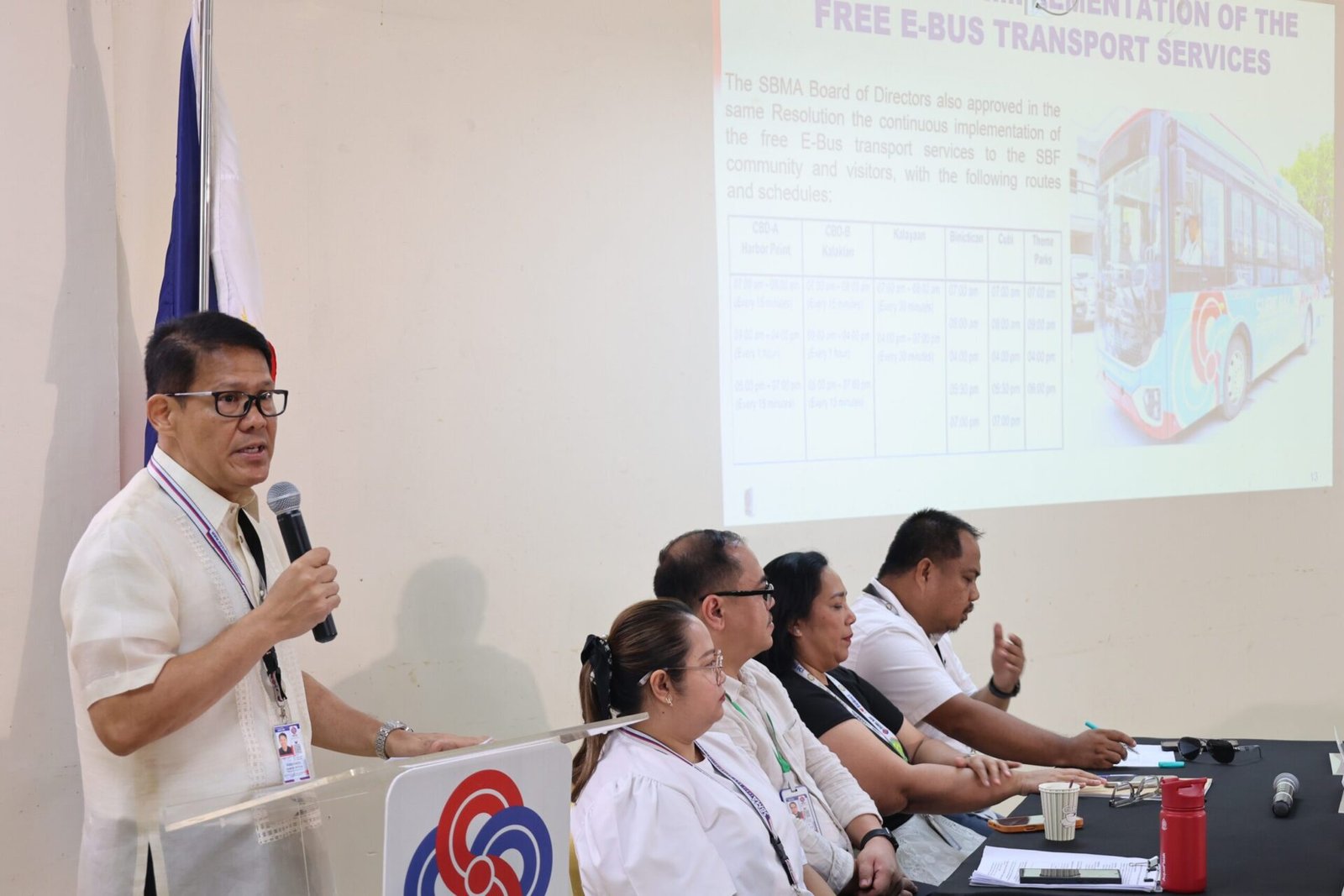
Subic Bay Metropolitan Authority (SBMA) Senior Deputy Administrator for Support Services Atty. Ramon O. Agregado (left) explains details during the Public Hearing on Temporary Measures to Support Affected Sectors pursuant to Executive Order 110 held on Monday, May 11, at the Subic Bay Exhibition and Convention Center in Subic Bay Freeport Zone.
SUBIC BAY FREEPORT — The Subic Bay Metropolitan Authority is rolling out additional financial relief measures for stakeholders in the Subic Bay Freeport Zone (SBFZ) as part of efforts to cushion the impact of the ongoing global energy crisis.
The measures were discussed during a public consultation held on May 11, 2026 at the Subic Bay Exhibition and Convention Center (SBECC), where SBMA officials presented temporary assistance programs approved by the agency’s Board of Directors.
According to SBMA Senior Deputy Administrator for Support Services Atty. Ramon O. Agregado, the financial relief initiatives are contained in Board Resolution No. 26-04-1768, approved on April 21, 2026, in response to Executive Order No. 110 signed by President Ferdinand Marcos Jr. declaring a State of National Energy Emergency across the country.
Among the relief measures are a 50-percent reduction in the Road Users’ Fee (RUF), suspension of the Environment and Tourism Administrative Fee (ETAF), free renewal of SBMA IDs in electronic ID (e-ID) format for SBF workers, reduced renewal fees for physical IDs, and the implementation of the Economic Relief Assistance Program (ERA 4) for locators.
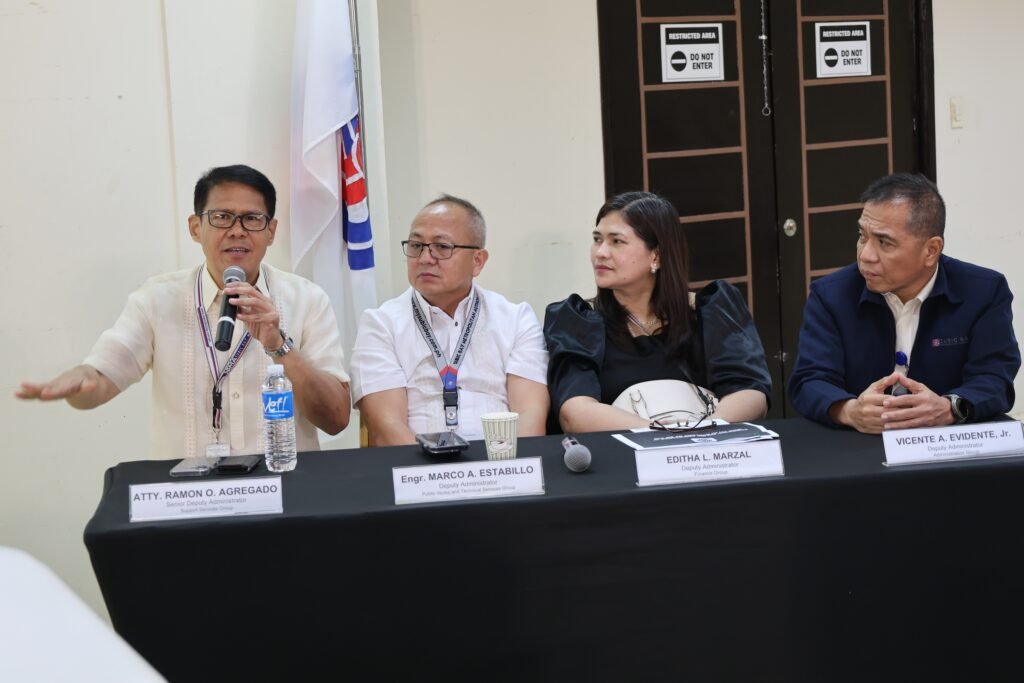
Agregado explained that the RUF applies only to Class 3 vehicles such as trucks, heavy equipment, and similar vehicles that regularly use the Freeport’s road network.
“Please note that the RUF has not been adjusted since 1997 despite inflation and the fact that the prices of services and materials have increased numerous times throughout the years. Notwithstanding the above, the SBMA Board of Directors likewise approved in the same Resolution to defer the implementation of the programmed increase or adjustment of the RUF,” Agregado said.
The SBMA also suspended the collection of ETAF from tourism-related establishments and guests staying in hotels, inns, condotels, and similar accommodation facilities within the Freeport.
Under Board Resolution No. 26-04-1789, the suspension of ETAF payments took effect on April 24, 2026 and will remain in place until modified or lifted by the Board.
Tourism establishments covered by the suspension include restaurants, wellness centers, massage and health spas, golf courses, beach resorts, theme parks, and other tourism-related businesses, except duty-free shops and retail stores.
To further assist workers in the Freeport, the agency is also launching the SBMA e-ID renewal system. Renewal fees will be temporarily waived for workers who choose the electronic ID format instead of physical cards.
Meanwhile, workers opting for physical IDs will benefit from reduced renewal fees from ₱200 to ₱130 under Board Resolution No. 26-04-1788, subject to approval by the Office of the Government Corporate Counsel.
The SBMA Board also approved ERA 4 through Resolution No. 26-04-1784, allowing locators to defer 50 percent of their monthly lease rental or sublease share billing for up to six months beginning May 2026.
“Locators will be allowed to pay half of their monthly billing without penalty for late payment for billings issued by the Accounting Department from May to October 2026, provided they have no past-due accounts as of April 30, 2026,” Agregado added.
The relief measures come amid global economic disruptions caused by the 2026 Middle East conflict, which severely affected international oil supply following the closure of the Strait of Hormuz. The crisis has resulted in soaring fuel prices, supply shortages, and economic challenges affecting several countries, including the Philippines.
In response, President Marcos issued Executive Order No. 110 on March 24, 2026, directing a whole-of-government approach to ensure energy stability, control prices, and protect consumers from the effects of the global energy emergency.