

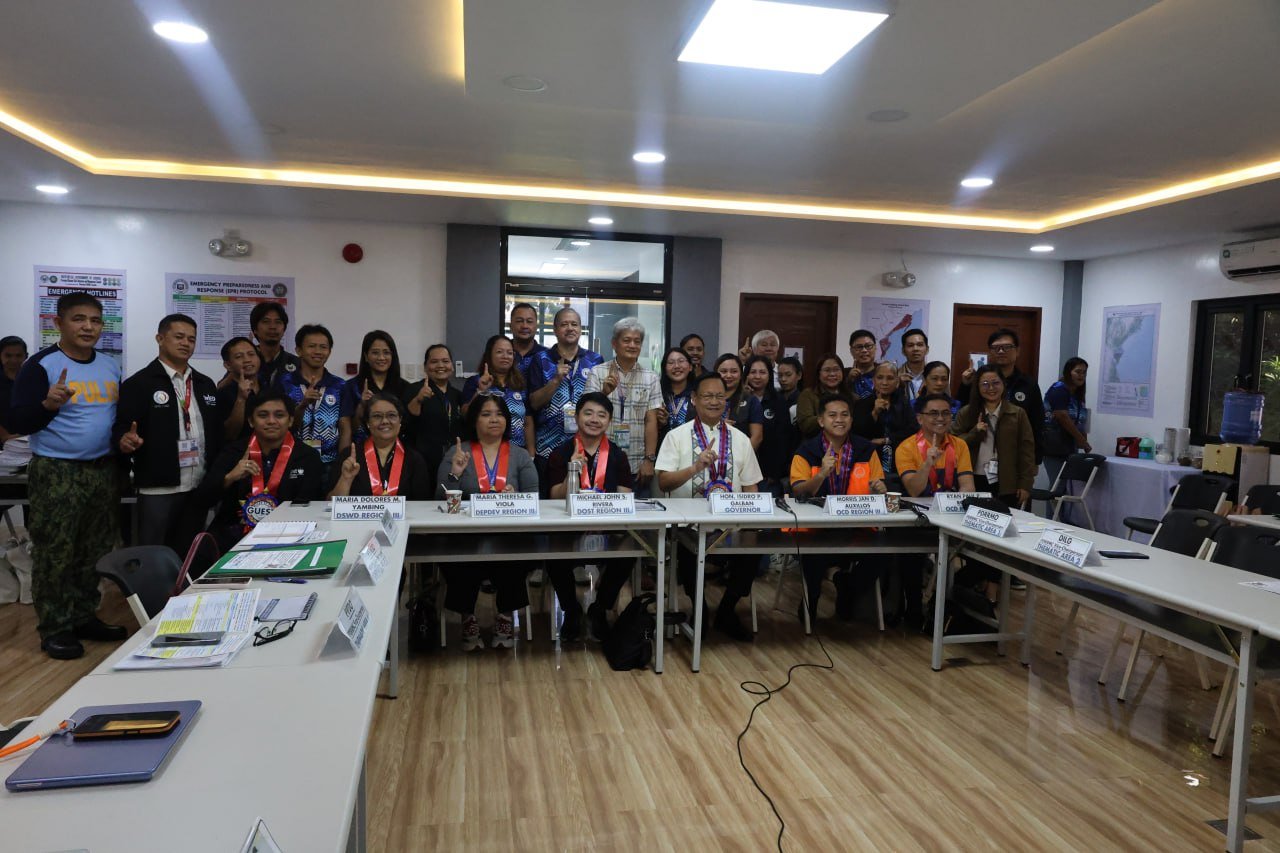
BALER, Aurora – The regional field assessment for the 26th Gawad KALASAG (KAlamidad at Sakuna LAbanan, SAriling Galing ang Kaligtasan) Seal for Local Disaster Risk Reduction and Management Councils and Offices (LDRRMCOs) is underway in Aurora from Aug. 12 to 14, 2026.
The three-day assessment is being conducted at the second floor of the Emergency Operations Center (EOC) of the Provincial Disaster Risk Reduction and Management Office (PDRRMO) Building in Barangay Suklayin here to evaluate the disaster risk reduction and management (DRRM) programs, systems, capabilities, and best practices of the provincial and local governments.
The Gawad KALASAG is the country’s premier recognition program for individuals, groups, and institutions that have demonstrated significant contributions to disaster risk reduction and management and humanitarian initiatives before, during, and after disasters and emergencies.
During the opening program on Wednesday, Provincial DRRM Officer Engineer Amado Elson A. Egargue said the assessment should not be viewed merely as a compliance exercise but as an opportunity for the province to showcase its DRRM programs, accomplishments, and best practices.
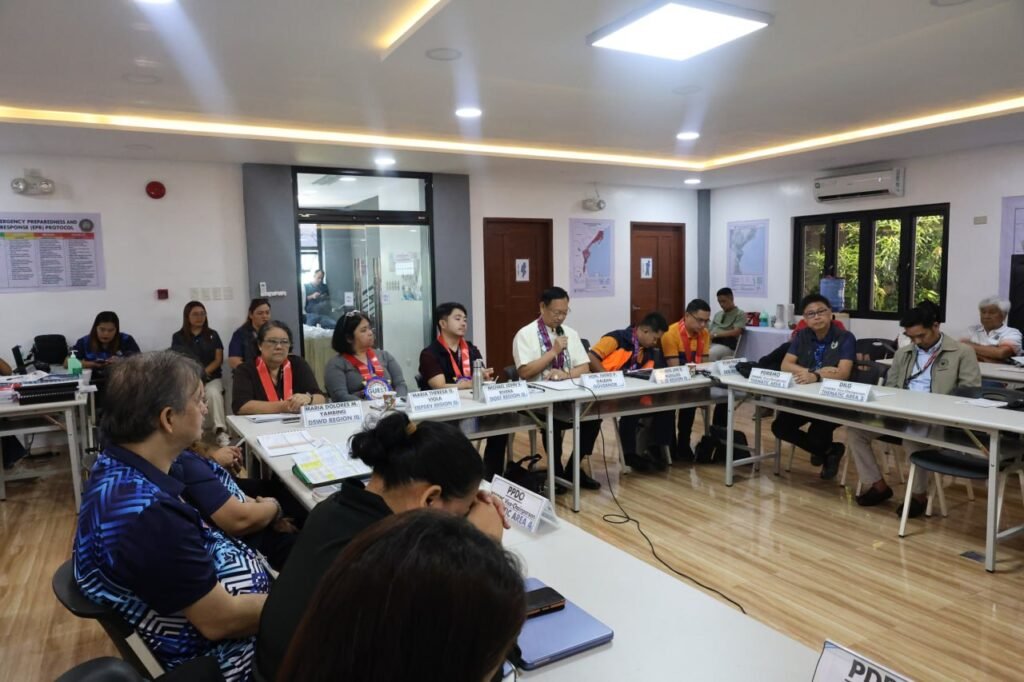
Egargue also thanked the Regional Validation Committee for its time, guidance, and recommendations, which he said would help further improve the province’s DRRM programs and services.
In his message, Aurora Governor Isidro P. Galban emphasized the importance of disaster resilience as an integral part of the provincial government’s governance and development agenda.
Galban noted that Aurora’s location facing the Pacific Ocean makes the province vulnerable to strong typhoons, storm surges, flooding, and other hazards.
He said government efforts should go beyond responding to disasters and should focus on anticipating risks and strengthening preparedness before hazards occur.
“Our objective, therefore, is not merely to respond to disasters. We must anticipate them,” Galban said, emphasizing the importance of early preparation, coordination, and prepositioning of resources.
The governor also highlighted the provincial government’s coordination with the Office of Civil Defense (OCD), Department of the Interior and Local Government (DILG), Department of Social Welfare and Development (DSWD), Department of Science and Technology (DOST), Department of Education (DepEd), Department of Health (DOH), Department of Public Works and Highways (DPWH), and other national government agencies.
Galban said the Gawad KALASAG is more than a recognition program, as it also serves as a standard for determining whether government systems are effective, institutions are prepared, and communities are adequately protected during disasters.
Following the governor’s message, the Regional Validation Committee was introduced and an orientation on the field assessment process and validation mechanics was conducted.
Morris Jan D. Auxillos of OCD Region 3, lead validator, led the orientation.
#Other members of the Regional Validation Committee are Ryan Paul P. Roxas of OCD Region 3; Michael John S. Rivera of DOST Region 3; Jayson Kho Flores of DILG Region 3; Maria Dolores M. Yambing and Dwight Felix F. Cruz of DSWD Field Office 3; and Maria Theresa G. Viola of DepDev Region 3.
On the first day, the assessment includes a desk evaluation involving the presentation and verification of submitted means of verification (MOVs).
The validation team is also conducting field visits to the Provincial DRRM Office, Operations Center (OpCen), evacuation center, and food and non-food items (F/NFI) storage facility to assess the actual condition of the facilities, systems, and disaster preparedness measures in place.
On Aug. 13, the second day of the assessment, the LDRRMCOs of Baler and Casiguran are scheduled for validation in the morning, followed by Dinalungan and Maria Aurora in the afternoon.
On Aug. 14, the final day, the LDRRMCOs of Dilasag and Dipaculao will undergo assessment in the morning, while Dingalan and San Luis are scheduled in the afternoon.
An exit conference is expected to be held at the conclusion of the three-day assessment, during which the validation team will present its observations and recommendations based on the assessment.
The Gawad KALASAG assessment aims to further strengthen the capacity of local governments in disaster preparedness, prevention and mitigation, response, rehabilitation, and recovery toward safer and more disaster-resilient communities.
The regional field assessment remains ongoing in Aurora as of Wednesday. (Jason de Asis)