

Photo by: Bureau of Customs
PASAY CITY — An intelligence-driven anti-drug operation at the Ninoy Aquino International Airport (NAIA) has thwarted an attempt to smuggle more than 2.1 kilograms of suspected methamphetamine hydrochloride (shabu) into the country, highlighting the growing role of inter-agency intelligence sharing in securing the Philippines’ borders.
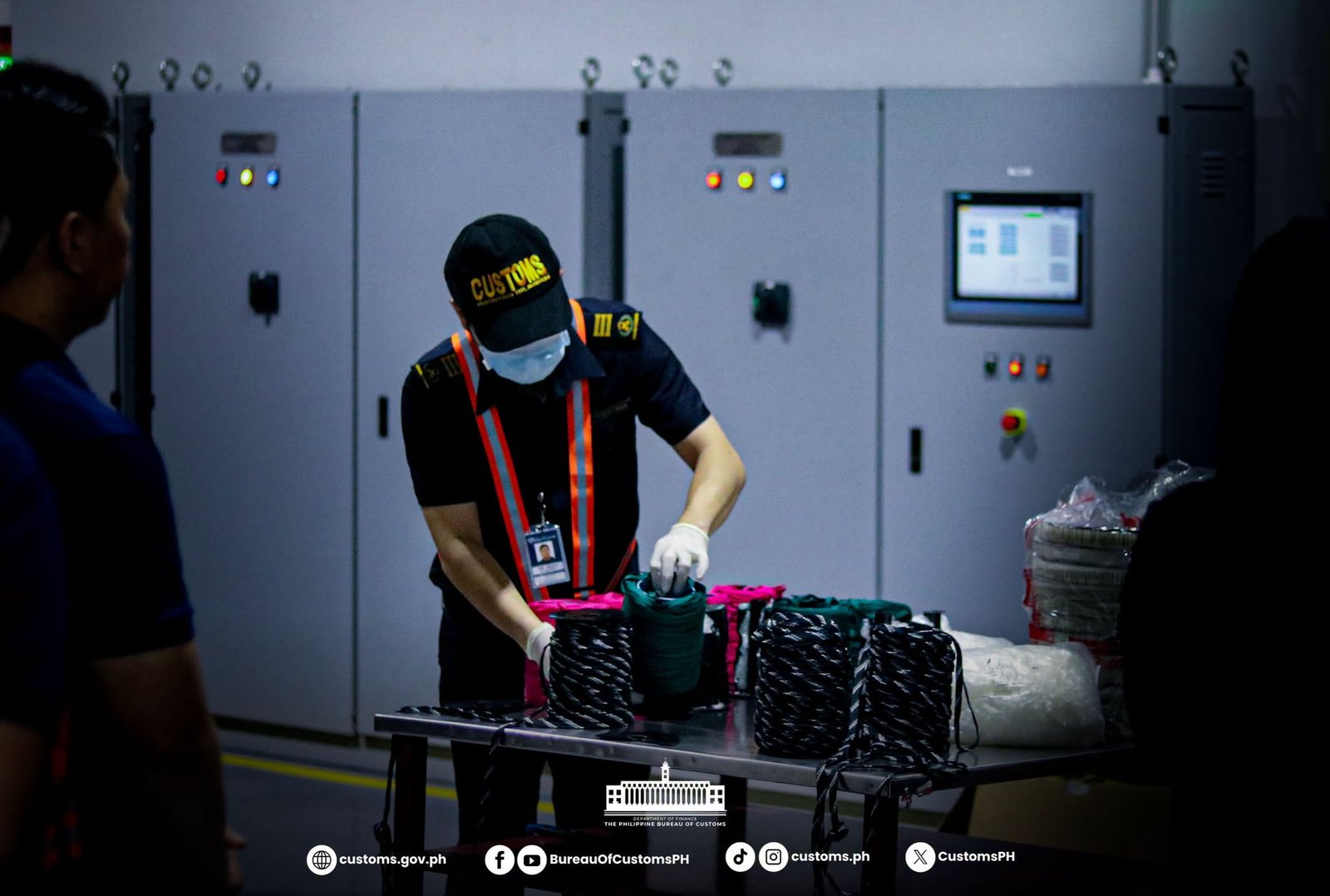
The Bureau of Customs–NAIA (BOC-NAIA) seized the suspected illegal drugs, with an estimated standard value of ₱14.29 million, after customs officers uncovered the narcotics concealed inside multiple spools of rope in an inbound shipment declared as “Plastics and Ropes.”
The parcel was intercepted on 8 July 2026 after the Philippine Drug Enforcement Agency (PDEA) provided derogatory information that prompted customs authorities to subject the shipment to a full physical examination.
Inspectors discovered approximately 2,102 grams of suspected shabu hidden within the rope spools, exposing what authorities believe to be another attempt by international drug syndicates to disguise illegal narcotics as ordinary commercial cargo.
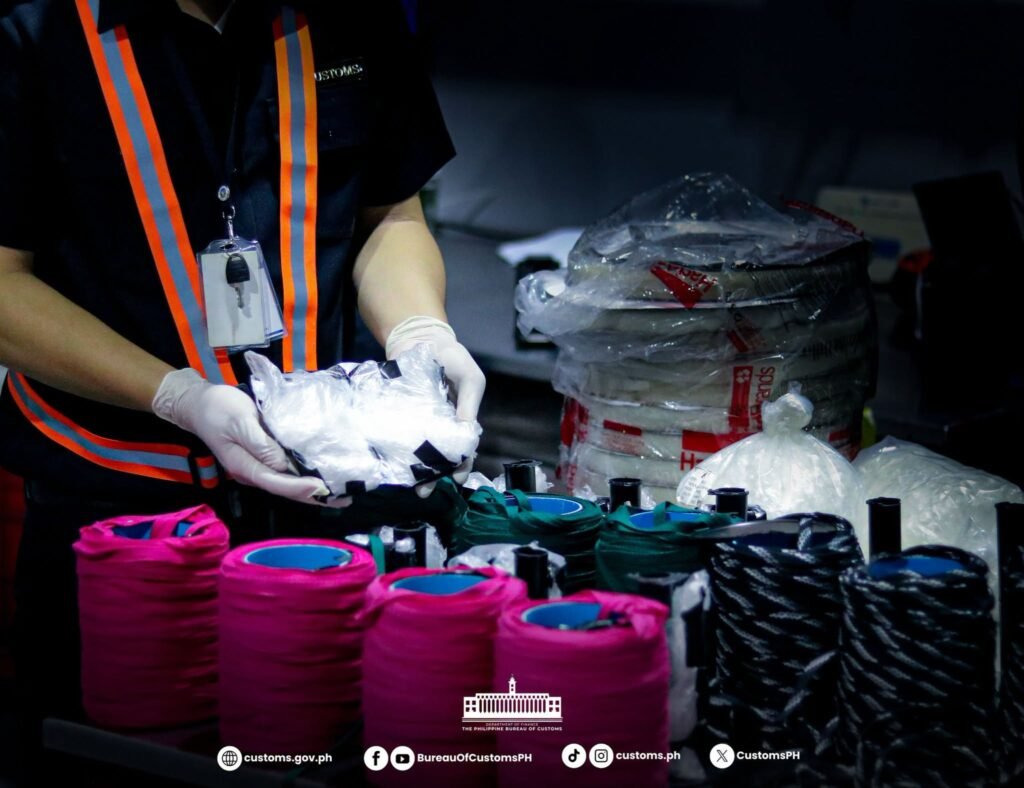
Photo by: Bureau of Customs
The operation brought together the Bureau of Customs, PDEA, the NAIA Inter-Agency Drug Interdiction Task Group, the Customs Anti-Illegal Drugs Task Force, the Philippine National Police Aviation Security Group, the Airport Police Department, the Philippine National Police Drug Enforcement Group, the National Bureau of Investigation, and the Bureau of Immigration.
The seized contraband has been turned over to the PDEA for laboratory examination and case build-up, while authorities continue follow-up operations to identify the individuals and organizations behind the shipment.
District Collector Yasmin Obillos-Mapa said the interception demonstrates the effectiveness of intelligence-based profiling and coordinated enforcement in detecting sophisticated smuggling schemes before they reach local communities.
The seizure also reflects the Bureau of Customs’ intensified border protection campaign under Commissioner Ariel F. Nepomuceno, whose administration has prioritized intelligence-led customs enforcement, stronger inter-agency coordination, and risk-based cargo inspections to combat the illegal drug trade and other forms of transnational smuggling.
As criminal organizations adopt increasingly sophisticated concealment methods, customs authorities said sustained intelligence sharing, technology-driven inspections, and coordinated law enforcement operations remain critical in preventing illicit drugs from entering the country and protecting national security.